
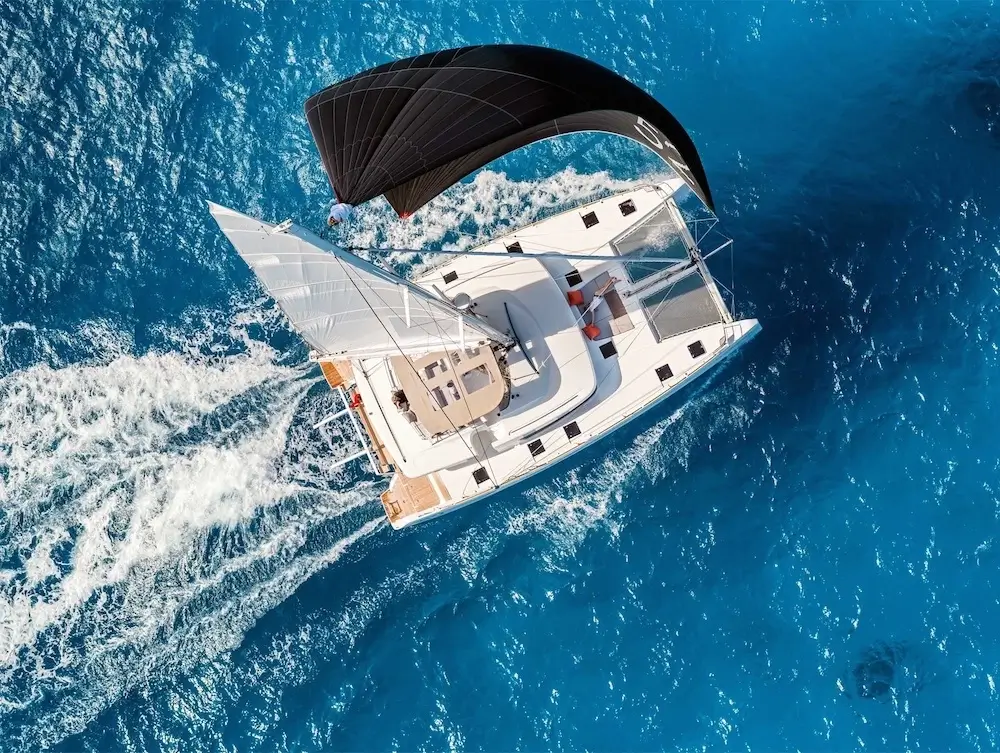
Are Catamarans Safe? The Truth About Capsizing, Storms, and Offshore Sailing
If you listen to the bar talk down the yacht club, you would think catamarans capsize if you so much as look at them the wrong way, slam like a dustbin in a gale, and refuse to go to windward. Yet, funny thing, more and more sailors are quietly swapping to “cats” and very few ever go back to a monohull once they have. So what is the truth about catamaran safety, especially offshore in real weather?
In this article we will look calmly at capsizing, storms, bluewater passages and the old myths that still haunt multihulls, and we will separate genuine risks from pure pub fiction.
What People Worry About Most
Before we dive into the details, let’s list the big safety questions most newcomers ask:
- “Do cruising catamarans really capsize?”
- “Are they safe in storms and big following seas?”
- “What about pitch‑poling?”
- “Are they unsinkable or just good marketing?”
- “Do they slam themselves to bits upwind?”
- “Are they actually safer than a monohull offshore?”
Most of these fears come from old designs, beach cats and racing machines pushed far beyond what any sane cruiser would attempt, not from modern cruising multihulls.
Capsize Risk: How Real Is It?
Beach cats vs bluewater cats
First, let’s get one uncomfortable truth on the table: catamarans can capsize. Beach cats flip all the time, and a few high‑performance racing cats have gone over while being driven to the edge of reason with far too much sail up in ridiculous conditions. That image of a big cat upside down with the crew clinging to the hull is dramatic and sticks in people’s minds.
But that is not how a modern cruising catamaran is sailed or designed. Cruising multihulls have wide beams, high reserve buoyancy and conservative rigs, and in normal hands they are almost impossible to turn over unless you really go out of your way to do something foolish, like carrying full canvas beam‑on in steep breaking seas.
Stability and “when does it go over?”
A well‑designed cruising cat has enormous initial stability. As the wind builds, the boat accelerates instead of heeling like a monohull, and the force that would try to put a mono on her ear is used to drive the cat forward on a level platform. On many modern designs the theoretical static stability limit is well above storm‑force wind speeds; the mast will usually fail long before the boat goes over.
Reefing early is still essential, as with any sailboat. Carried sensibly, a reefed mainsail and smaller headsail keep the loads manageable and the boat fast but comfortable, far from the point where capsize becomes anything more than a theoretical calculation.
Why some sailors prefer a cat even if it did invert
There is another side to this story that many monohull sailors prefer not to think about. If a catamaran ever did go over, you are still sitting on a huge, floating platform, which is notoriously hard to sink. The hulls are full of buoyancy, and even upside down the boat is a big, visible target for search aircraft and rescue helicopters, especially if your EPIRB is doing its job.
There have been real‑world cases where crews were lifted off an inverted catamaran, only for the boat to be found later still afloat and capable of being towed back or even sailed on. Compare that with a monohull that knocks its keel off on a submerged object or opens a hole “no bigger than your fist” – in most monos there is only one way you are going, and that is straight down.
Pitch‑Poling and Bridge Deck Slamming
Why older designs had a problem
The horror story you will hear next is pitch‑poling: the boat going end‑over‑end in big seas. Older designs sometimes carried their solid bridge decks too far forward with only small trampolines, so at high speed the bows could drive into the back of a wave, ship a lot of green water and quite literally trip over their own weight.
What modern cruising cats do differently
Modern cruising catamarans are drawn very differently:
- Higher bridge deck clearance to reduce slamming.
- Large, open trampolines forward to let green water drain away quickly and reduce weight on the bows.
- More buoyant forward sections and better weight distribution.
Those big trampolines are not just there so the kids have somewhere to bounce and sunbathe; they are a central safety feature designed to evacuate water and help prevent pitch‑poling. On today’s cruising cats, this type of accident is so rare as to be almost unheard of when the boat is sailed sensibly.
Storm Tactics: How Cats Behave in Heavy Weather
Slowing down instead of charging on
One of the easiest ways to get into trouble in any boat is to try to power through bad weather as if you are racing for the America’s Cup. Catamarans are fast enough that, if mishandled, they can surf too quickly down big seas, risking burying a bow. The answer is simple and boring: slow the boat down.
In heavy weather good practice on a cruising cat means:
- Reducing sail early and progressively.
- Keeping speeds comfortable and under control.
- Using a drogue or para‑anchor if needed to keep the stern or bow to the seas and prevent surfing too fast.
Handled like this, a catamaran rides out big conditions safely, often with less drama and motion than a similar‑sized monohull.
Comfort and fatigue offshore
Safety offshore is not just about whether the boat survives; it is about whether the crew are exhausted or still thinking clearly after days at sea. A multihull’s level sailing makes an enormous difference.
- You are not hanging on at 20–30 degrees of heel all day.
- You can cook a proper hot meal in conditions where many mono crews would be living off cold snacks.
- You are not being thrown from one side of the cabin to the other or strapped into a lee cloth to sleep.
A well‑rested crew who can eat and move around without being battered is a safer crew.
Unsinkable? Buoyancy, Flooding, and Redundancy
Why most modern cats are hard to sink
Most modern cruising catamarans are extremely difficult to sink outright. The twin hulls incorporate significant reserve buoyancy, many designs have sealed sections and watertight compartments, and the volume is spread out rather than concentrated around a deep keel.
That does not mean you can ignore basic seamanship and maintenance, but it does mean that a collision, grounding, or localized flooding is less likely to send the entire boat to the bottom. It is perfectly possible, in the worst case, to live quite comfortably on an inverted but floating catamaran while you wait for assistance.
Twin engines and duplicated systems
Cruising cats also offer built‑in redundancy that directly impacts safety:
- Twin engines: if one dies, fouls a prop or swallows a lobster pot, you still have the other to get you out of trouble or into harbour.
- Often separate fuel and electrical systems on each hull.
- Large, stable platforms for man‑overboard recovery from the sugar‑scoop transoms.
For bluewater sailing, that sort of redundancy can be worth far more than one theoretical righting‑moment curve on paper.
Do Catamarans Slam Themselves Apart?
Bridge deck clearance and real‑world slamming
Let’s not pretend: if you insist on beating into a short, steep head sea in almost any catamaran, you will eventually get slamming under the bridge deck. That sudden “whump” as a wave hits the underside is noisy, uncomfortable, and, if you keep at it, hard on the nerves.
However, modern designs have dramatically improved this:
- Higher bridge deck clearance reduces how often the sea reaches the underside at all.
- Better hull shapes and weights mean cats can maintain a comfortable speed at slightly freer angles, avoiding the worst of the chop.
There is also a practical reality: you do not have to pound to windward for hours just to prove a point. Easing off by 10–15 degrees, letting the boat stretch her legs, and choosing your weather windows wisely will often get you there faster and in far better shape anyway.
Offshore Performance and Pointing Ability
“They do not go to windward” – still true?
The old complaint that “catamarans will not point” is now, frankly, rubbish for most modern cruising designs. The early multihulls with stubby rigs and low‑aspect foils did struggle upwind; today’s boats will routinely tack through around 90 degrees without any special tricks and can track as well as – or better than – many cruising monos.
Daggerboards, where fitted, make a big difference to windward performance, allowing the boat to sail higher and reduce leeway, though for some long‑distance cruisers the simplicity of fixed mini‑keels is still preferred. Either way, it is no longer accurate to say you are doomed to slop sideways every time you point a multihull’s nose towards the wind.
Average speeds and passage safety
Off the wind, even quite conservative cruising cats will comfortably out‑sail most equivalent monohulls. On many boats you can plan coastal or ocean passages at around 7–9 knots under sail without pushing hard, and your worst day’s run in poor conditions is often similar to the average run of a mono of the same length.
Why does this matter for safety?
- You have more ability to work with weather systems, not just endure them.
- Because most systems move around 10–12 knots, a faster boat sometimes lets you outrun, avoid or angle away from the nastiest parts.
Speed used intelligently is a powerful safety tool offshore.
Real‑World Handling: Short‑Handed and in Harbours
Easy for a couple to manage
From a handling point of view, big cats can look intimidating with their freeboard and beam, but they are surprisingly easy to manoeuvre. With engines spaced wide apart you can pivot the boat in her own length using just the throttles, often more precisely than a mono with a single prop and a big rudder.
Under sail, most modern cruising cats are set up so that a husband‑and‑wife team or small crew can do everything from the safety of the cockpit: halyards, reef lines and sheets led aft, in‑boom furling options, electric winches, and self‑tacking jibs. For power boaters coming across to sail, it really can be “one bit of string to pull” rather than a whole deck‑top obstacle course of winches and clutches to dance around.
Stable decks and fewer acrobatics
A multihull’s lack of heel is not just about comfort, it is about preventing accidents.
- Flat decks and bridgedeck cockpits mean fewer stumbles, trips and falls.
- You are not constantly bracing yourself against a sliding cabin sole.
- Moving around at night or in a seaway is calmer, less like being on a bucking bronco.
Again, a crew that is not being hurled around the boat is a safer, more effective crew when something genuinely demanding happens.
The Bottom Line: Are Catamarans Safe Offshore?
So, are catamarans safe for storms and bluewater sailing? A well‑designed, properly loaded and sensibly handled cruising catamaran is at least as safe offshore as a comparable monohull, and in many ways safer, especially when you factor in comfort, speed, redundancy and the ability to stay afloat even in worst‑case scenarios.
Yes, multihulls can capsize if abused, just as monohulls can sink if holed or if the keel is lost. The real difference is that a modern catamaran gives you:
- Massive initial stability and a level platform.
- High average speeds that let you work with the weather instead of just endure it.
- Redundant engines and systems.
- Huge buoyancy and a strong tendency to stay up, even if inverted.
As always, the biggest safety factor is not the number of hulls but the judgment of the skipper: choosing the right design, keeping the boat within its design weight, reefing early, avoiding macho heroics in bad weather and looking after crew and gear.
Get those parts right, and you may find – like many ex‑monohull sailors – that once you have gone to a catamaran, the idea of going back feels rather like trading in a comfortable waterfront apartment for a damp little tent.