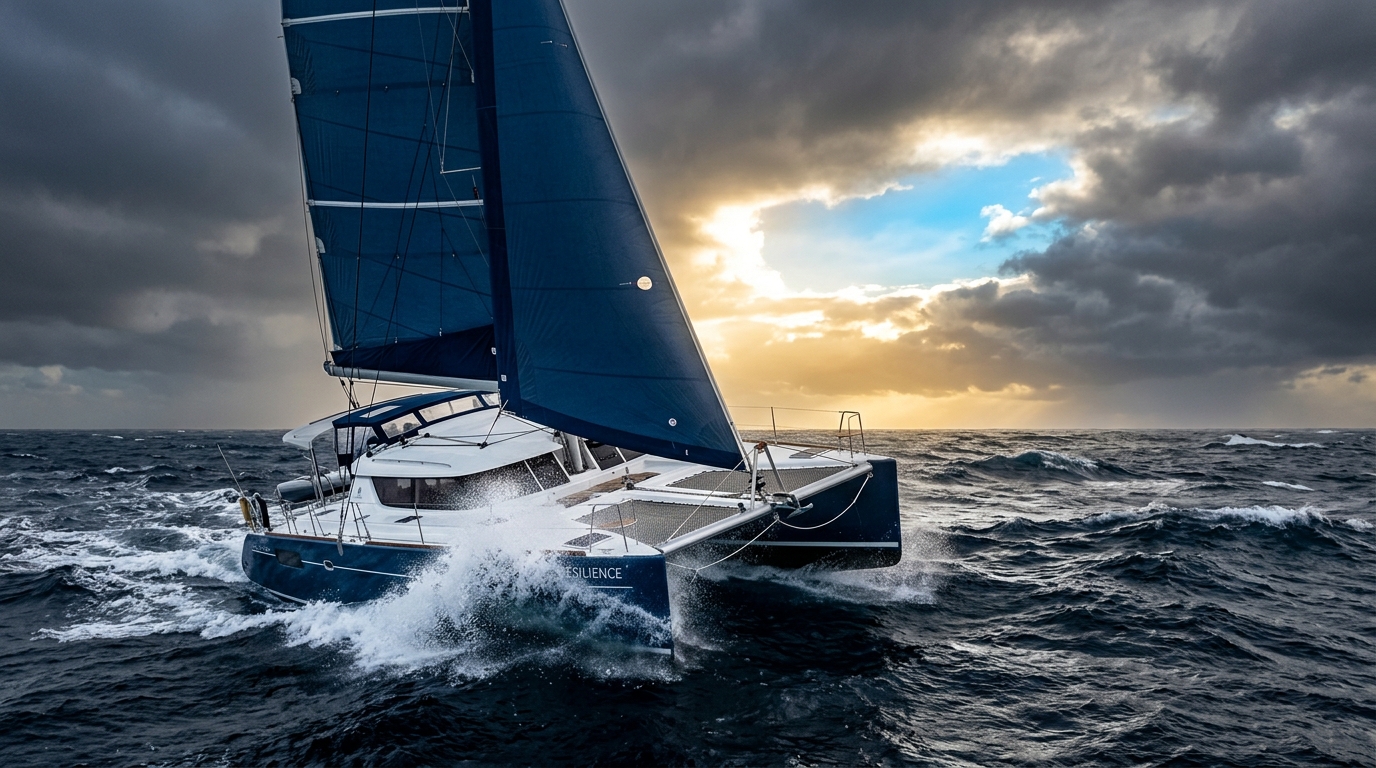
They said that about the Titanic and look what happened to that!
O.K., well the first thing I can say is A BIG FAT NO, they are not unsinkable, but with most cats you have a lot better chance of staying afloat in a catamaran than you do in most vessels!
Now that old chestnut about if you get a hole the size of your fist in the bottom of your monohull, that weight of the keel is going to take your boat to the bottom, or even your keel falling off kind of does the same thing and sure ask Tony Bullimore!
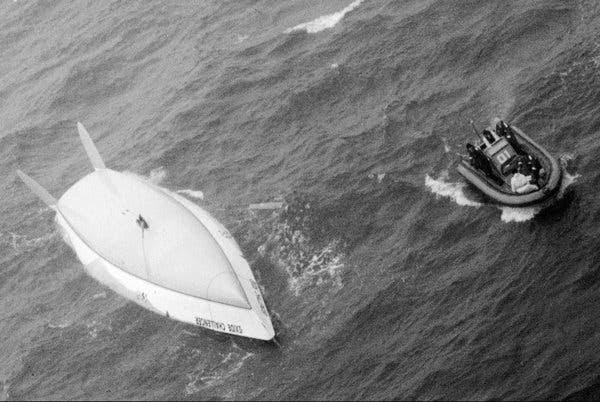
Sure as people said in the old days, you can live quite comfortably in an upside-down catamaran and wait to be rescued, but Tony did that in his monohull, albeit minus that heavy keel!
Now a corroded brittle metal skin fitting can fail without warning or a nylon one can even fail due to the hose splitting or coming dislodged, but the good thing on a catamaran that people forget to mention is that they are mostly placed above the waterline, which is another great safety feature on catamarans.
The issue of the escape hatch failing is a big one and many older catamarans have sunk because of the handle cording with the catch breaking in heavy weather, this was happening quite often and definitely a regular event, not always sinking the boat, but delivering quite a scare. So bad in fact that the coding Authorities are now recommending that escape hatches are not fitted or non-opening ones are fitted with a special hammer close by.
CAPSIZE
These days it is rare to see a cruising catamaran or Trimaran capsize, but I am not talking about performance multihulls here sailing "balls to the wall" with a huge sail area ploughing into heavy seas pushing things to the limit, but it does happen, but you almost have to try to do it.
PITCH POLING
Pitch Poling in the old days was more of a concern on the old designs with the filled-in Bridgedeck up forward. The nets or trampolines were not just there for the kids to jump up and down on or for sunbathing and watching dolphins under the boat. It was for a safety reason. With your sails up driving into a big sea rolling down a large wave at full tilt burying its nose into a deep trough, your catamaran comes to an abrupt halt with the next following wave pushing you "Arse over Tit" as we say in England! :)
The trampoline was there to disperse this green water immediately giving immediate buoyancy. These days some of the new designs and the rise of the "Condo Cat", not that they are bad and mostly great sailing vessels and many doing circumnavigations, they are built for a purpose for space inside and out, but these bridgedecks seem to be sneaking further and further forward once again with smaller and smaller "if any" and I really question these designs to deliver that safety margin.
The WOW factor at the boat shows highlighting this element of nice flat spacious deck space and extra volume enhances the unique selling points of that particular model, but that idea, my friend, tends to worry me.
HITTING SUBMERGED OBJECTS
This is quite a big one, as the chances of this happening are becoming more common, especially at night, floating logs, even whole trees, containers floating just below the surface, wrecks, all kinds of debris floating around out there. Even Hitting a Whale at sea can be an issue, not to mention the Orca attacks around the coast of Portugal, Gibraltar and Spain.
Forward-facing sonar can help and a few gadgets now available on the market, but preparation in case of any eventuality is a must. If you worry too much about these things you would never leave the marina or drive your car to the local shops….
Catamarans are pretty much unsinkable with huge built-in buoyancy in all fairness and you're really very unlikely to sink from hitting a submerged object. Most have very strong crash bulkheads, above and below the waterline, but it is pretty rare.
FIRE
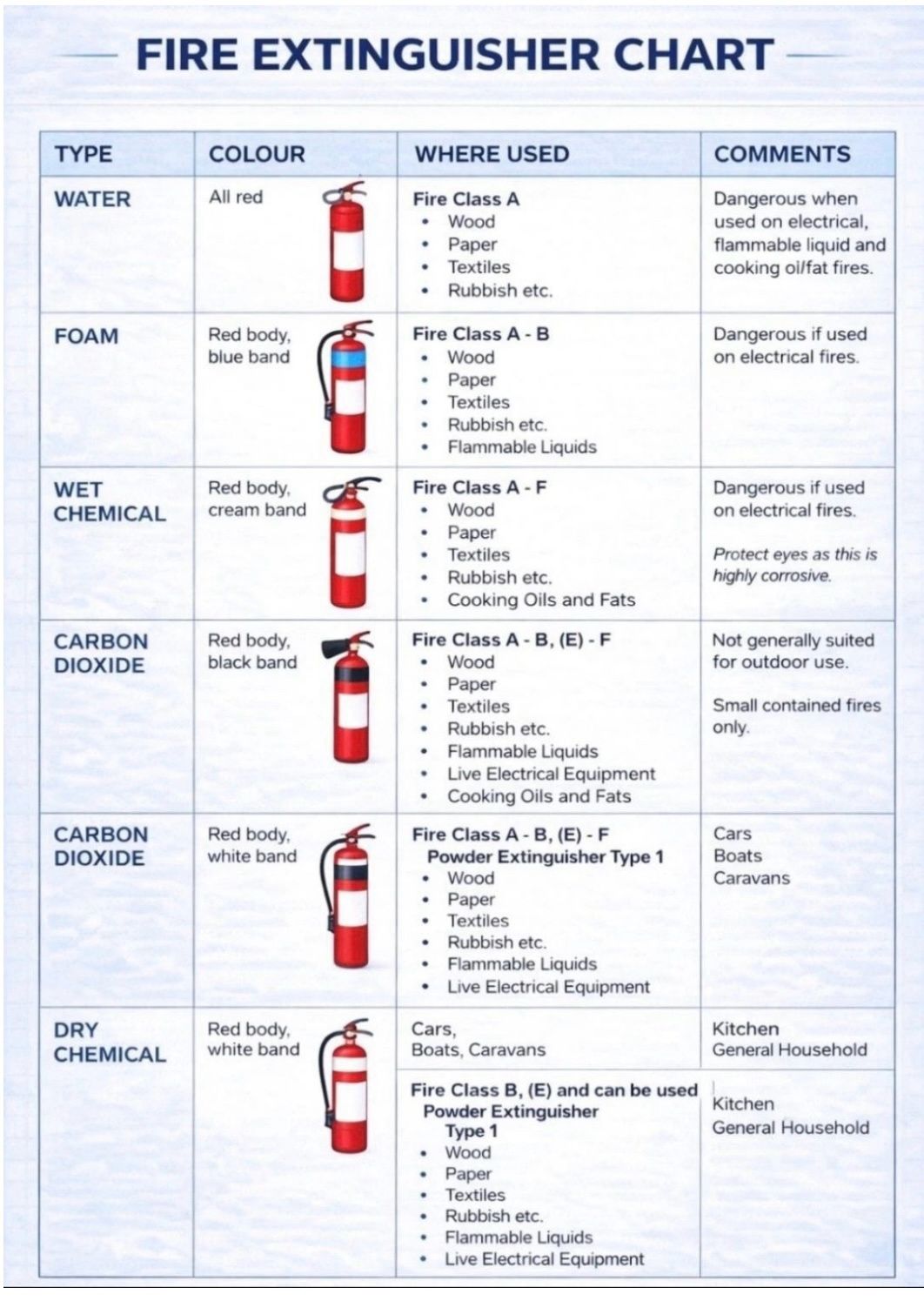
This is the biggest worry to most sailors and it's wise to take every precaution on board to make sure you are not a victim. In-date fire extinguishers in every cabin, saloon and even in the cockpit because if it is not in control immediately, you and the crew have only moments to fight the fire and unfortunately have no choice but to abandon ship.
All gas appliances should be turned off and petrol (Gas) should be in a sealed fireproof container, ready to throw overboard, if necessary, on the stern. If it is easy enough, it may be a good idea to isolate the batteries. Lithium batteries undoubtedly cause fires, so keep an eye on your management system and any sign of swelling of your batteries or signs of getting hot, get them off the boat ASAP, even keep an eye on laptops and mobiles, especially in a hot climate.
Automatic fire extinguishers should be fixed in both engine compartments in the engine room using Halon dry foam extinguishers or equivalent, with a couple of hand-held spares. Know where they are, as if the worst happens you really do not want to be scrambling around in a locker trying to find them!
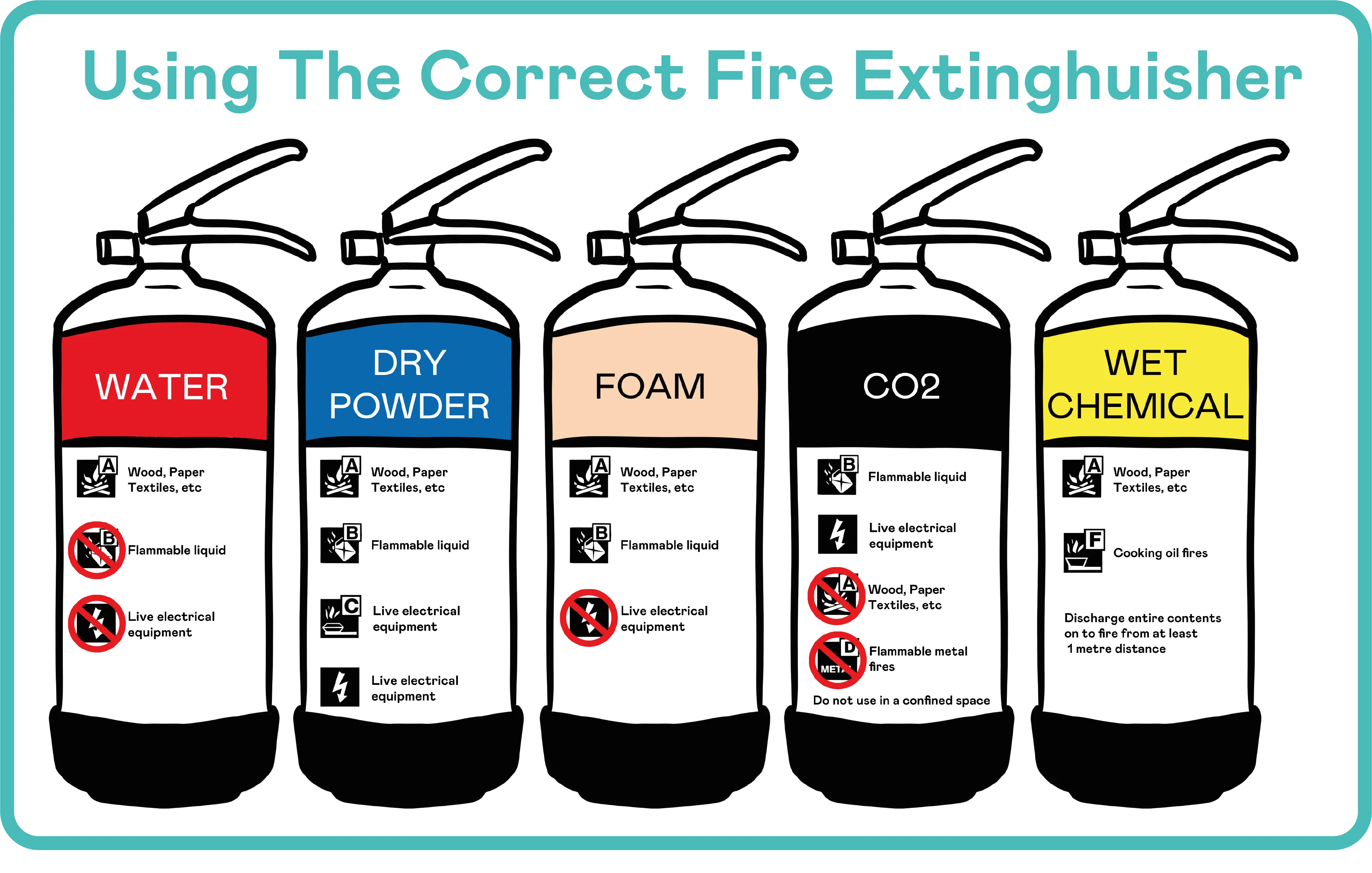
Also instruct the crew on how to use which extinguisher on the right type of fire and why! Keep a purpose-made fire blanket in the galley.
WEIGHT
We all love our home comforts and the event of the "Condo Cat" only encourages us! A catamaran, as most realise, needs to be light to sail well, that is left in no doubt. Hence most of the performance catamarans are built of lightweight Carbon infusion and everything is weighed in construction.
If your average cruising cat is built within its design weight, no problem, but look at the list of what we add:
- Washing Machine and dish washer
- Microwave, oven, and hob
- Ice maker and water maker
- Internal wiring looms
- Water tanks and fuel tanks
- Electronics and water toys
- Outboard and tender
- Clothing and books
I have had buyers insist they want a Jet ski on the davits on a Bahia 46 or a Williams jet boat on a Catana. This weight, of course, all adds up and those Davits that only take 150 kilo on the stern were only designed to take 150 kilo, not 300 kilo as at any one time in a big sea you have 300 kilo hanging on one davit. That 35 H.P. outboard, also on there because you would break your back clamping it to the bracket on the rail, does not help.
Then someone wants a hydraulic platform fitted on a catamaran that it is not designed to take it. All this stuff, if the boat is not designed to take, it will not only slow you down, it will turn your multihull into a submarine!
Remember Fred and Wella at the drive-in and the Brontosaurus ribs!