
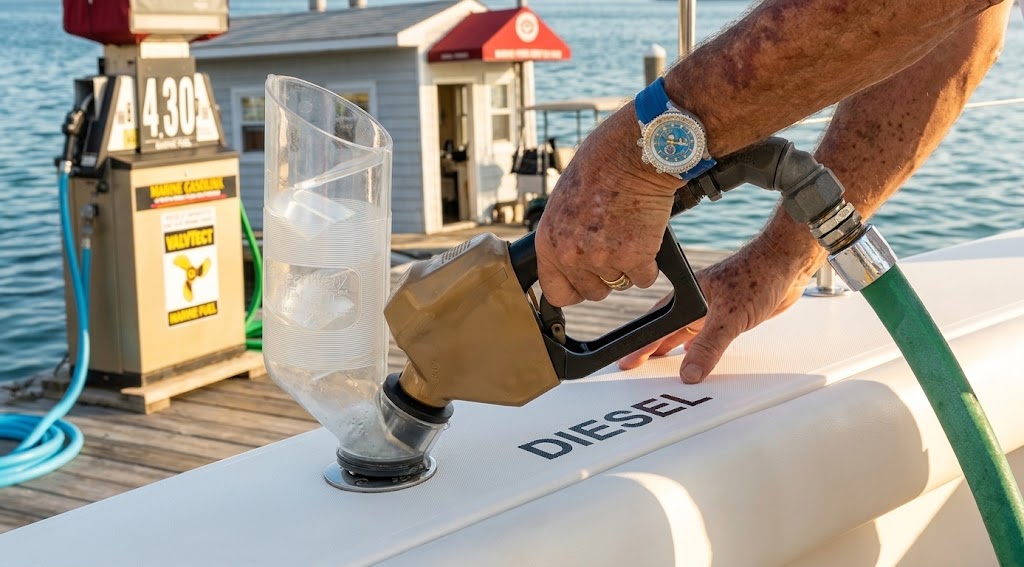
OK, maybe I'm exaggerating the point, but let's face it - when we pull up to the fuel dock at any marina, we put that nozzle straight into our fuel tank and pull the trigger. No, it's probably not milk flowing into your tank. But sometimes it's just as bad - probably much worse.
What Is Diesel Bug, and Why Does It Matter?
The dreaded fuel bug - a bacteria that survives in your tank - is a particular problem if your boat is left sitting for long periods, giving it time to multiply.
It develops in your fuel tank thanks to water ingress or condensation, and turns into a slimy, globular sludge. That sludge isn't just inconvenient. It can kill you.
A Tragedy That Hits Close to Home
I'll give you the short version of this - not to scare people, but because it's personal. A customer and good friend of mine, along with three of his crew, died in a terrible accident off the coast of Morocco, aboard his Fountaine Pajot Belize 43.
I believe fuel contamination was a contributing factor. He'd just changed his filters in Denia, mainland Spain, with his tanks fairly low, because he wanted to buy cheap fuel in Ceuta. Then he ran into a big storm that started in the Gulf of Lion and put him on a lee shore, right when he most needed sea room. I believe the blocked filters meant his engines failed him at the worst possible moment - the boat was swept ashore, got tangled in lobster pots, and ended up on the rocks. The fuel bug, I believe, was a contributing factor.
This is why this subject is close to my heart.
How It Bites You
Diesel bug can block fuel lines and filters, corrode tanks, and catch you out when you're least expecting it.
The first symptoms are your engine losing power, sometimes stopping completely, and being hard to restart. You change the fuel filters, but they clog again shortly after, and the engine starts kicking out a lot of smoke.
The best thing to do is keep your fuel topped up when you can, especially if you're leaving the boat tied to the dock for a while. Even then, sludge can still be lurking at the bottom of your tank. In any kind of swell or choppy conditions, it can sneak up on you and block your filters in a couple of hours - especially when you're already low on fuel. You'll usually spot dark, jelly-like deposits in your primary fuel filter, or dirt and sludge in your water separator. You can pretty much detect it immediately just by checking inside your fuel filter bowl.
How to Get Rid of It
Eradicating it can be difficult. Simply topping up with clean fuel doesn't cure the problem - and can sometimes make it worse.
Using an additive - an off-the-shelf biocide from the local chandlery - can help, but it's essential to do the job properly. You can get a marine engineer to "polish" the fuel for you, or do it yourself by circulating it through fine filters, but it needs to be done thoroughly:
- Drain any water sitting underneath the fuel
- Replace all of your fuel filters
- Personally, I'd flush the tank too
Just adding the additive to the tank isn't enough on its own - the dead organisms will still block your filters.
Prevention
Drain your water filters regularly, and add biocide at least twice a year, especially before any winter layup.
You can't always guarantee the quality of the fuel you're filling up with. Stick to busy fuel docks with a good turnover of fresh fuel - but even then, you can't be sure. Keep a good supply of spare filters; overkill on filters is a good policy.
Modern diesel contains biodiesel, which seems to absorb more moisture than the old stuff - which only encourages the bug, making your tank a more comfortable place for it to nest.
It's like that household bleach that was advertised to kill 99% of all household germs - you were always left worrying about that 1% lurking in the corner of the room, growling at you.