For decades, the debate between catamarans and monohulls has divided sailors, yacht owners, and dockside philosophers alike. Opinions are often loud, emotional, and usually based on something someone once heard down the pub.
At Worldwide Catamarans, we prefer experience over folklore.
After sailing, living aboard, selling, and brokering multihulls around the world, one thing has become very clear: once people switch to a catamaran, very few ever go back. Let’s look at why – and address the myths head-on.
The Rise of the “Supercat”
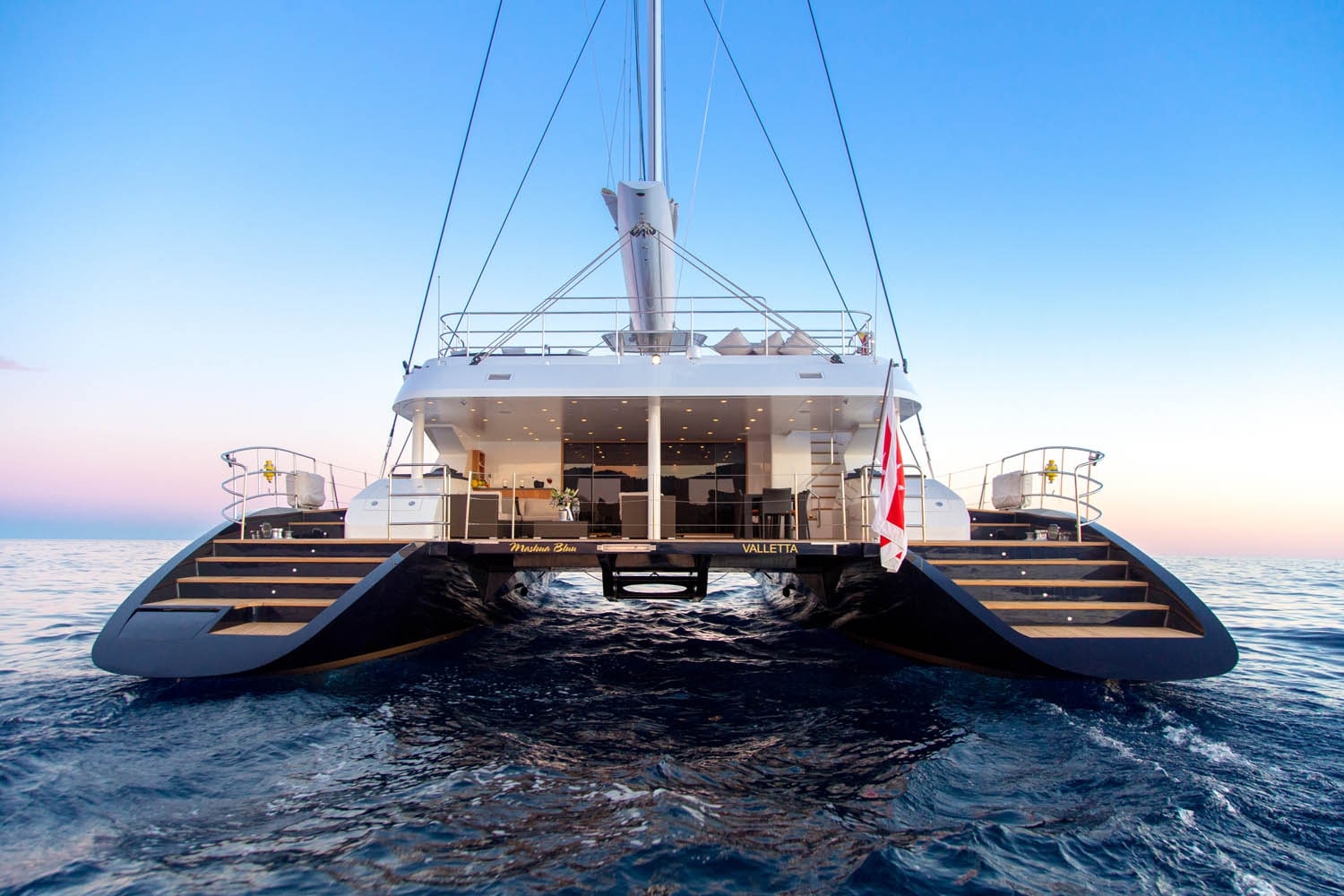
Catamarans have evolved dramatically over the last 20 years. Today, they’re not just cruising platforms – they’re genuine superyachts. Brands like Sunreef and Blue Coast Yachts have coined the term “Supercats”, building power and sailing catamarans up to 200ft, including iconic vessels such as Galaxy and Galaxy of Happiness.
This shift has caught the attention of traditional monohull and motor yacht owners, many of whom are now quietly – and sometimes reluctantly – making the switch.
Power to Sail – The One-String Reality
One of the biggest surprises for power boat owners is how easy modern sailing catamarans are to handle. With electric winches, in-boom furling, and self-tacking jibs, sailing can genuinely be “one bit of string to pull”.
In fact, many catamaran owners barely hoist the sails at all – because a catamaran is already an excellent motor sailor. Under power, most cruising cats will comfortably cruise at around 10 knots using much smaller engines than a comparable monohull, with significantly better range and fuel economy. Under sail, performance improves even further.
The Famous Objections – And Why They’re Outdated
Let’s address the so-called “famous five” objections.
- “Catamarans capsize.”
Yes, beach cats and extreme racing multihulls do. Modern cruising catamarans are a different story. They are incredibly stable, extremely difficult to capsize, and most are effectively unsinkable. Even in the worst-case scenario, a catamaran stays afloat – unlike many monohulls that sink after keel or hull failure. - “You don’t get the same feel at the helm.”
Correct – you get a different feel. Catamarans accelerate quickly, feel faster without heeling, and deliver performance without rail-in-the-water misery. Your worst day on a cat is often the average day on a monohull. - “Moorings cost double.”
Sometimes. But many marinas now charge by length only, and when cruising, cats save heavily by anchoring comfortably in shallow water and using a tender. Many long-term cruisers spend weeks or months without entering a marina at all. - “They don’t point to windward.”
Rubbish. Modern catamarans tack efficiently, often matching or outperforming monohulls. And besides – why punish your crew by beating into a head sea when a small course change gets you there faster and in comfort? - “They slam.”
Only when badly driven or poorly designed. Modern cats with higher bridge deck clearance have dramatically reduced slamming. Two inches of marketing difference won’t change the sea, but good design absolutely will.
The Real Advantages of Catamarans
Beyond myth-busting, catamarans shine where it actually matters:
- Shallow draught – explore coves, beaches, and anchorages monohulls can’t reach
- Exceptional stability – no heeling, safer movement, easier living
- Performance – faster averages, better passage planning, and weather avoidance
- Ease of handling – ideal for couples, with twin engines and excellent manoeuvrability
- Space and comfort – a 40ft cat rivals a 60ft monohull for living space
- Privacy – separate hulls, en-suite cabins, and proper owner layouts
- Safety – redundancy, visibility, easier MOB recovery, and better motion comfort
- Economy – lower fuel burn, longer range, and hybrid options
- Charter potential – highly desirable layouts and excellent earning capability
Put simply, catamarans offer more usable space, more comfort, and more enjoyment for the same length.
Designed for Real Cruising Life
Catamarans are not about racing at all costs. They are about living well at sea. You don’t need Kevlar underwear or to cut your toothbrush in half. You can cruise at 8+ knots comfortably, cook proper meals underway, sleep without being thrown out of bed, and enjoy the journey rather than endure it.
That’s why commercial operators, navies, ferries, and offshore industries increasingly rely on multihull designs – because they work.
Final Thoughts
Catamarans were once dismissed as unconventional. Today, they are setting the standard for modern cruising, luxury, safety, and long-distance living aboard.
You don’t have to abandon monohulls to appreciate them – many of us still love sailing them. But if comfort, space, efficiency, and real-world cruising matter to you, it’s easy to see why so many sailors cross over and never look back.
If you’re curious, open-minded, or quietly tempted – come and step aboard. That’s usually all it takes.
Want help choosing the right catamaran?
Tell us your cruising plans, budget, and must-haves, and we’ll guide you to the best options - including alternatives you may not have considered.