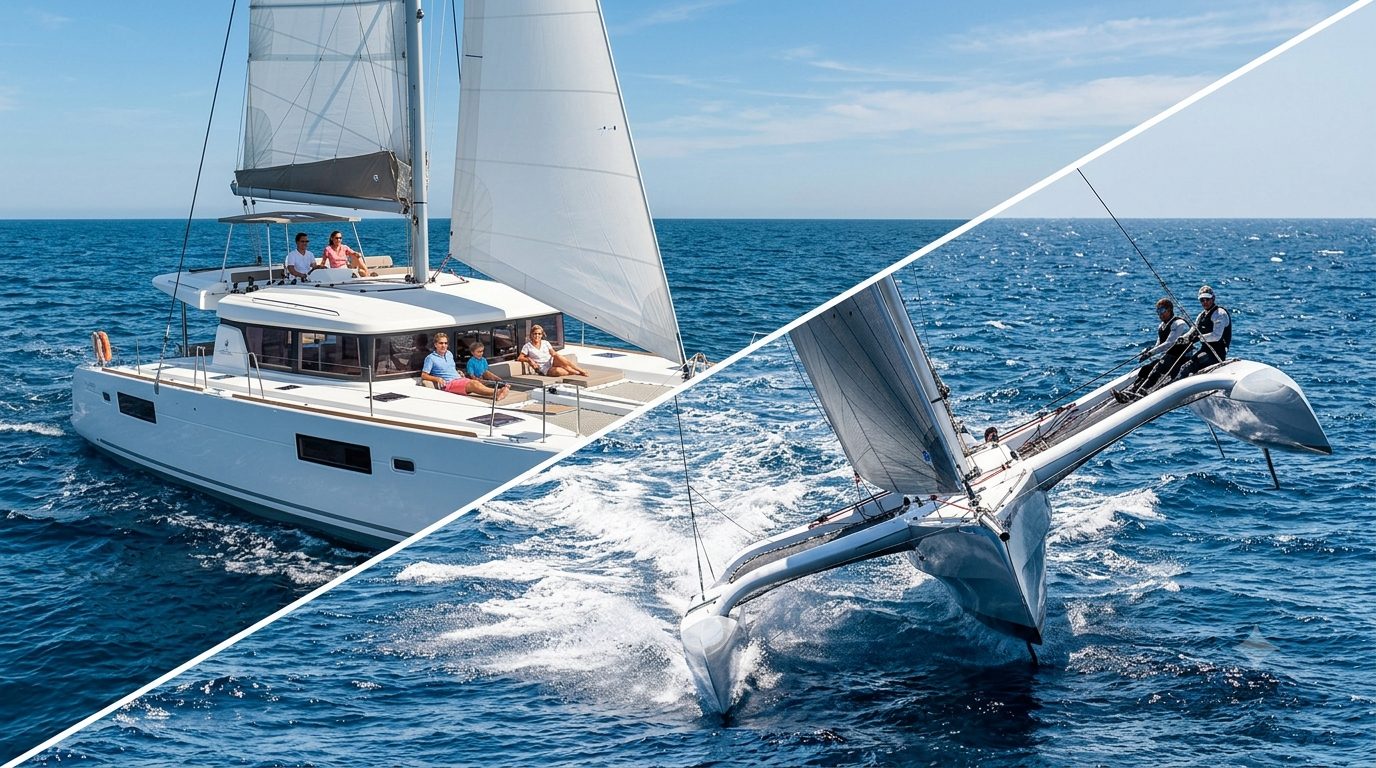
Different horses for different courses.
Trimarans have gone through plenty of development over the years, and depending on your plans, a trimaran may be just what you're looking for. Compare a trimaran to a monohull, for instance, and a trimaran will give you a massive amount of extra performance, with an added fun factor.
Multihulls have become increasingly popular among sailors looking for greater stability, comfort and performance than traditional monohulls. However, buyers often face one important question: catamaran or trimaran?
Catamarans – Comfort, Space and Versatility
Catamarans are by far the most popular choice for cruising, liveaboard lifestyles and charter operations.
Advantages of Catamarans
- Exceptional living space, with wide saloons and large cabins.
- Excellent stability at anchor, with minimal heeling.
- Greater carrying capacity for cruising equipment, watermakers, generators and toys.
- A strong resale market thanks to worldwide demand.
- Ideal for families, long-distance cruising and charter businesses.
Disadvantages of Catamarans
- Higher marina fees due to their beam.
- Generally not as fast as performance trimarans.
- Some older designs can experience bridge-deck slamming in rough conditions — in fairness, they're built to take it, but it's still scary and uncomfortable.
Trimarans – Performance and Excitement
A trimaran consists of a central hull with two smaller outer hulls (amas). They're renowned for their speed and sailing performance.
On a monohull, remember that all the wind force trying to put you on your ear is also what's driving you forward — accelerating you from a standstill, faster and faster. A trimaran gives you that same forward drive without the heeling.
Advantages of Trimarans
- Outstanding speed and acceleration.
- Excellent upwind performance.
- Reduced heeling compared with monohulls.
- A thrilling sailing experience for performance-oriented sailors.
Disadvantages of Trimarans
- Less interior accommodation and storage space.
- Lower payload capacity — overloading can significantly reduce performance.
- A smaller resale market, with fewer available models.
- Less suitable for charter operations and large families.
Which Should You Choose?
The answer depends entirely on how you intend to use your boat.
Choose a Catamaran if you want:
- Comfortable long-distance cruising
- Liveaboard capability
- Family sailing
- Charter opportunities
- Spacious accommodation
Choose a Trimaran if you want:
- Maximum sailing performance
- Fast passage times
- Exciting sailing characteristics
- Competitive sailing or performance cruising
Thoughts
There is no universally "better" option — catamarans and trimarans each offer unique advantages. For most cruising sailors, families and charter clients, the catamaran remains the preferred choice thanks to its space and comfort. For sailors seeking speed and a more dynamic sailing experience, the trimaran offers a compelling alternative.
At Worldwide Catamarans, we're pleased to offer both catamarans and trimarans, helping every sailor find the multihull that best suits their dreams and cruising ambitions.
"Whether your priority is luxurious cruising comfort or exhilarating performance, today's multihull market offers the perfect solution for every type of sailor."
The New Generation of Trimarans – More Than Just Performance
Traditional trimarans were often seen as niche performance boats — one-offs with limited accommodation, such as Dragonfly, Farrier and Rapido, offering not much more space on board than a monohull of the same size.
Now we're seeing a new style of trimaran on the market. Modern designs from builders such as Blue Coast Yachts, Neel Trimarans and Leen Power Trimarans have changed perceptions considerably.
Neel Sailing Trimarans, originally formed by Éric Bruneel, former director of Fountaine Pajot, who went out on his own to set up Neel Trimarans and later Neel Power Trimarans, changed the game in the cruising world.
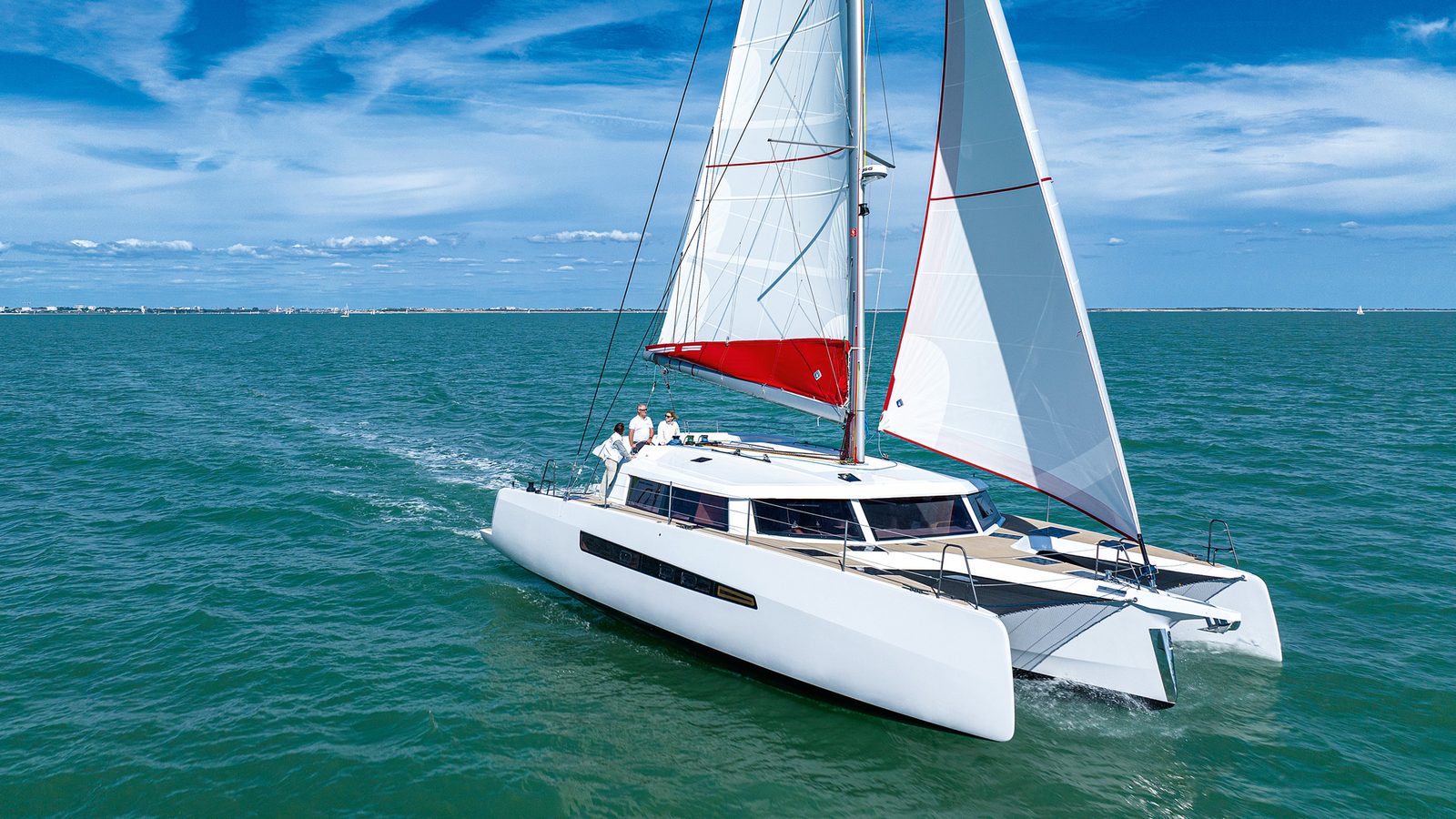
Neel Trimarans combine many of the advantages of both catamarans and monohulls:
- Exceptional sailing performance and higher average passage speeds.
- Reduced heeling and excellent stability.
- A central owner's cabin offering panoramic views.
- Narrower beam relative to comparable catamarans, which can simplify marina access.
- Lower wetted surface area, which can improve efficiency in lighter winds.
- Excellent ventilation and innovative interior layouts.
- Even more usable space on board than a comparable-sized catamaran.
Leen Power Trimarans
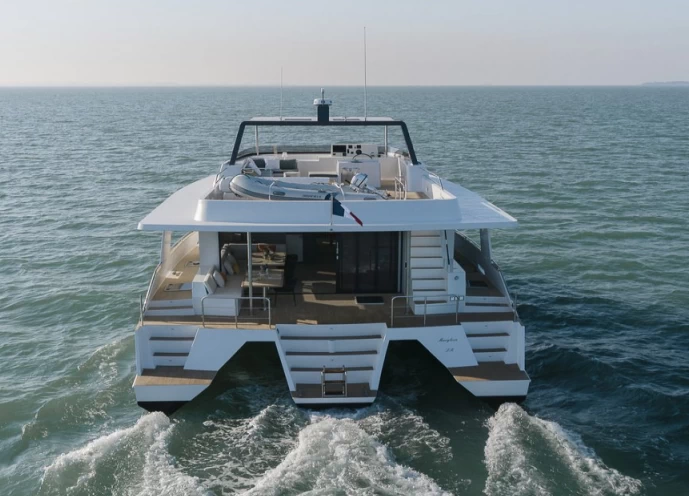
Leen has taken the trimaran concept into the cruising powerboat world, offering some significant advantages:
- Remarkably low fuel consumption compared with conventional power catamarans and monohulls.
- Long-range cruising capability, ideal for passagemaking.
- Increased comfort thanks to reduced rolling motion.
- Excellent efficiency at displacement cruising speeds.
- Greater safety through multihull redundancy and stability.
- Even more space than a power catamaran.
Blue Coast Yachts – Innovation in Power and Sail
Not as widely advertised as the likes of Sunreef or Gunboat, but realistically on another level — Jean-Jacques Coste at Blue Coast Yachts has been a master of building catamarans, in both power and sail, in the superyacht class for many years.
Blue Coast Yachts, based in Riga, Latvia, has been a pioneer in exploring highly efficient multihull concepts in both sailing and power configurations. Their designs focus on:
- Eco-efficiency and reduced environmental impact.
- Long-range cruising capabilities.
- Innovative layouts and advanced engineering.
- Combining performance with luxurious accommodation.
- Built in carbon fibre or marine-grade aluminium.
- Full custom build.
Blue Coast Yachts built the two largest power trimarans in the world in Riga, featured on the front cover of the prestigious yachting magazine.
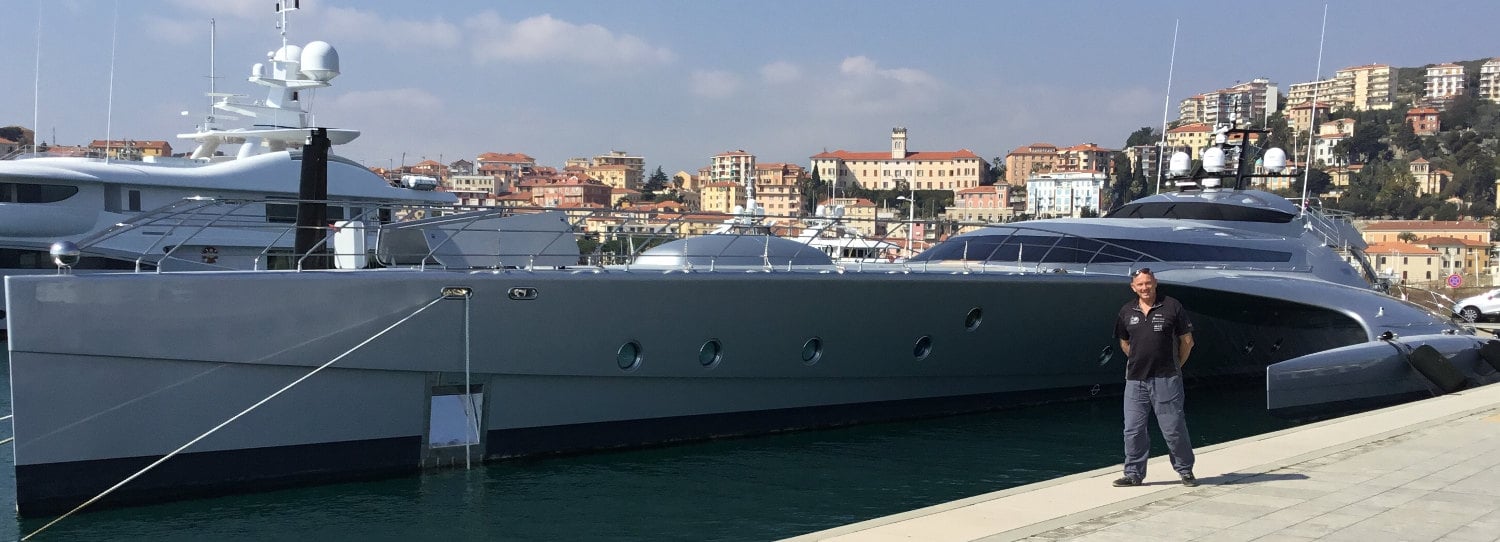
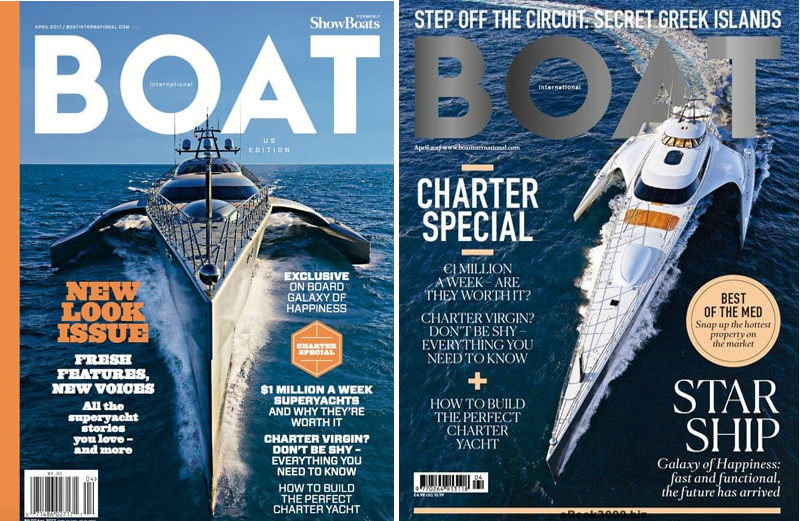
There are designs on the board for a 180ft sailing trimaran, and they're now producing a 65ft performance catamaran to compete with the likes of Gunboat, HH and others.
worldwidecatamarans.com/new-catamarans/sailing/blue-coast
Catamaran or Trimaran?
The traditional argument that catamarans offer space and comfort while trimarans offer only speed is becoming less clear-cut. Modern trimaran designs are increasingly providing:
- Greater interior volume
- Improved comfort at sea
- Outstanding fuel efficiency
- Higher-than-average passage speeds
- Innovative living arrangements
Ultimately, the choice comes down to personal priorities. Catamarans generally remain the leaders in accommodation, charter suitability and carrying capacity. Modern trimarans, however, can offer significant advantages in efficiency, performance, range and, in some cases, lower operating costs.
For today's multihull buyer, there has never been a wider choice of innovative designs available.
"The multihull world is no longer simply catamaran versus trimaran. Today's buyers can choose from an exciting range of designs that blend comfort, performance and efficiency in ways that would have seemed impossible only a decade ago."